Why Gum Recession Happens in Young Adults: Common Causes
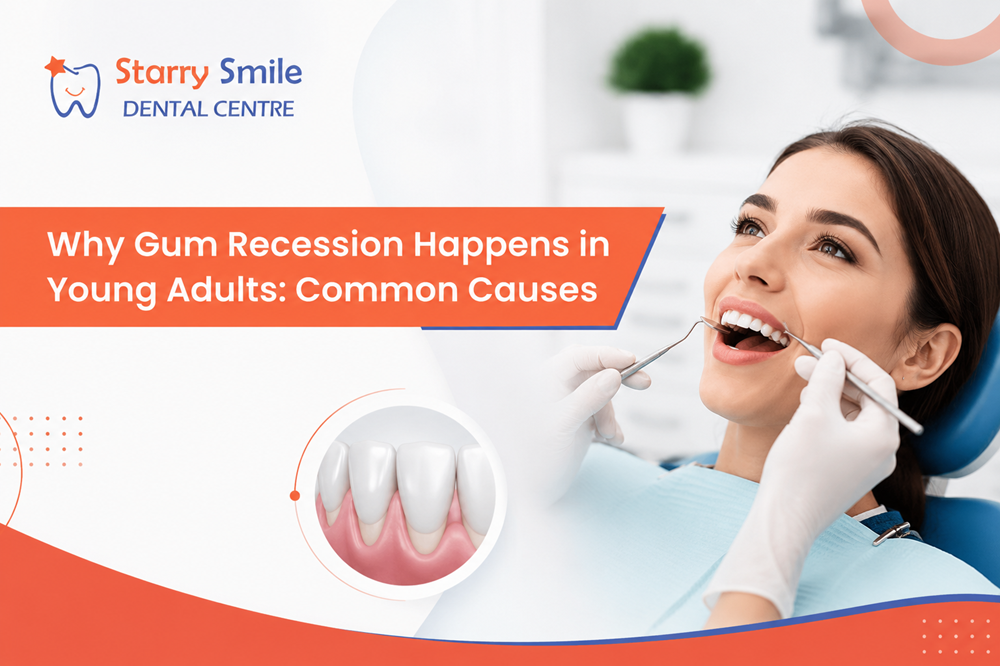
Why Gum Recession Happens in Young Adults: Common Causes. Many people believe gum recession only affects older adults. However, that is no longer true. Today, dentists are seeing an increasing number of young adults with receding gums due to modern lifestyle habits, poor oral hygiene, stress, and unhealthy routines. Although the condition often develops slowly, ignoring the early signs can lead to tooth sensitivity, cavities around the roots, and even tooth loss.
At Starry Smile Dental Clinic – Dubai, we encourage patients to recognize the warning signs early because timely treatment can protect your smile and prevent long-term dental problems. Therefore, understanding why gum recession happens in young adults is the first step toward maintaining healthy gums for life.
What Is Gum Recession?
Gum recession occurs when the gum tissue surrounding a tooth gradually pulls back or wears away, exposing more of the tooth or even its root. As a result, teeth may appear longer than normal, and patients often experience sensitivity while eating hot, cold, or sweet foods.
Unlike a cavity, gum recession does not heal on its own. Nevertheless, early diagnosis can stop the condition from progressing further.
Common Signs of Gum Recession
You may notice one or more of the following symptoms:
- Tooth sensitivity to hot or cold foods
- Teeth appearing longer than before
- Bleeding gums while brushing
- Swollen or red gums
- Bad breath that doesn't improve
- Small gaps between teeth and gums
- Pain near the gum line
If these symptoms continue, scheduling a dental examination is highly recommended.
Common Causes of Gum Recession in Young Adults
Several factors contribute to receding gums. In many cases, more than one cause is involved.
1. Brushing Too Hard
Many people think brushing harder cleans teeth better. Unfortunately, aggressive brushing slowly wears away gum tissue and tooth enamel.
Using a hard-bristled toothbrush or brushing with excessive pressure can gradually damage healthy gums.
Prevention Tips
- Use a soft-bristle toothbrush.
- Brush gently using circular motions.
- Replace worn toothbrushes every three months.
2. Gum Disease (Periodontal Disease)
One of the leading causes of gum recession is periodontal disease.
Bacteria build up along the gum line, causing inflammation and infection. Consequently, the gums begin pulling away from the teeth.
Common symptoms include:
- Persistent bad breath
- Swollen gums
- Bleeding while brushing
- Loose teeth in advanced stages
Fortunately, professional dental cleaning and early treatment can control gum disease effectively.
3. Poor Oral Hygiene
Skipping brushing or flossing allows plaque to harden into tartar.
Unlike plaque, tartar cannot be removed by brushing alone. Instead, professional cleaning becomes necessary.
Poor oral hygiene increases the risk of:
- Gum inflammation
- Tooth decay
- Gum recession
- Bad breath
Therefore, maintaining a consistent oral care routine is essential.
Healthy Habits vs Harmful Habits
| Healthy Habits | Habits That Increase Gum Recession Risk |
|---|---|
| Brushing twice daily | Skipping brushing |
| Daily flossing | Poor flossing habits |
| Regular dental check-ups | Delaying dental visits |
| Soft toothbrush | Hard brushing |
| Healthy diet | High sugar intake |
4. Teeth Grinding (Bruxism)
Many young adults grind or clench their teeth during sleep without realizing it.
Over time, this excessive pressure weakens the supporting tissues around the teeth. Consequently, gum recession may develop.
Signs include:
- Morning jaw pain
- Worn tooth surfaces
- Headaches
- Sensitive teeth
A custom night guard can often reduce further damage.
5. Smoking and Tobacco Use
Smoking reduces blood flow to the gums, making it difficult for tissues to heal properly.
Moreover, tobacco encourages bacterial growth inside the mouth, increasing the risk of periodontal disease.
Research consistently shows smokers are more likely to develop severe gum recession than non-smokers.
6. Misaligned Teeth
When teeth are crowded or uneven, brushing becomes more difficult.
Additionally, uneven biting forces place extra pressure on certain teeth, leading to gradual gum loss.
Orthodontic treatment may help distribute pressure more evenly while improving oral hygiene.
7. Hormonal Changes
Hormonal fluctuations can temporarily make gums more sensitive.
Although this is more common during pregnancy, hormonal changes related to adolescence or certain medical conditions may also increase gum inflammation in young adults.
Good oral hygiene becomes especially important during these periods.
8. Genetic Factors
Some individuals naturally have thinner gum tissue.
Even with excellent oral hygiene, genetics may increase the likelihood of gum recession.
Fortunately, regular dental monitoring allows dentists to identify early changes before serious damage occurs.
9. Oral Piercings
Tongue and lip piercings continuously rub against the gums.
Repeated friction may gradually wear away soft tissue, especially around the lower front teeth.
Removing problematic jewelry often prevents further recession.
10. Nutritional Deficiencies
Healthy gums require essential nutrients.
Low intake of certain vitamins may slow healing and increase inflammation.
Important nutrients include:
- Vitamin C
- Vitamin D
- Calcium
- Zinc
- Protein
A balanced diet supports both gum tissue and bone health.
Nutrients That Support Healthy Gums
| Nutrient | Food Sources | Benefit |
|---|---|---|
| Vitamin C | Oranges, berries | Supports gum healing |
| Calcium | Milk, yogurt | Strengthens teeth and bones |
| Vitamin D | Fish, eggs | Improves calcium absorption |
| Zinc | Pumpkin seeds, nuts | Supports tissue repair |
| Protein | Chicken, beans | Maintains healthy gums |
Who Is at Greater Risk?
Young adults may have a higher risk if they:
- Smoke regularly
- Brush aggressively
- Skip dental cleanings
- Have crooked teeth
- Experience chronic stress
- Grind their teeth at night
- Have a family history of gum disease
Recognizing these risk factors early can help prevent future complications.
How Dentists Diagnose Gum Recession
A comprehensive dental examination usually includes:
| Examination | Purpose |
|---|---|
| Gum measurement | Determines recession depth |
| Dental X-rays | Evaluates bone support |
| Bite assessment | Identifies excessive pressure |
| Plaque evaluation | Detects bacterial buildup |
| Medical history | Identifies contributing factors |
These assessments help create a personalized treatment plan.
Treatment Options for Gum Recession
Treatment depends on the underlying cause and the severity of the recession.
Common options include:
- Professional scaling and polishing
- Deep cleaning (root planing)
- Gum disease treatment
- Night guards for teeth grinding
- Orthodontic correction
- Gum graft surgery for advanced cases
- Improved home oral care
At Starry Smile Dental Clinic – Dubai, treatment plans are customized to protect natural teeth while restoring healthy gum tissue whenever possible.
How to Prevent Gum Recession
Simple daily habits can significantly reduce the risk.
You should:
- Brush gently twice a day.
- Floss every day.
- Visit your dentist every six months.
- Stop smoking.
- Wear a night guard if recommended.
- Eat nutrient-rich foods.
- Drink plenty of water.
- Replace your toothbrush regularly.
- Avoid using your teeth to open packages.
- Seek treatment for bleeding gums without delay.
Consistency matters more than brushing harder.
When Should You Visit a Dentist?
Do not ignore symptoms such as:
- Persistent tooth sensitivity
- Bleeding gums
- Teeth appearing longer
- Gum pain
- Loose teeth
- Ongoing bad breath
Early dental care often prevents more complex treatments later.
Conclusion
Gum recession in young adults is becoming more common, but it is often preventable. Factors such as aggressive brushing, gum disease, smoking, teeth grinding, poor oral hygiene, genetics, and nutritional deficiencies all play a role. Fortunately, early diagnosis and the right treatment can stop the condition from progressing and help preserve your natural smile.
At Starry Smile Dental Clinic – Dubai, our experienced dental team focuses on identifying the root cause of gum recession and providing personalized care for lasting oral health. Whether you need preventive guidance, professional cleaning, or advanced gum treatment, taking action today can protect your smile for years to come.
Social:
https://in.pinterest.com/pin/914934480572648957/
https://x.com/starry_llc/status/2081598094127558997
https://www.linkedin.com/feed/update/urn:li:share:7487364680747859968/


Comments
Post a Comment