Pediatric Dentistry: Essential Dental Treatments for Children
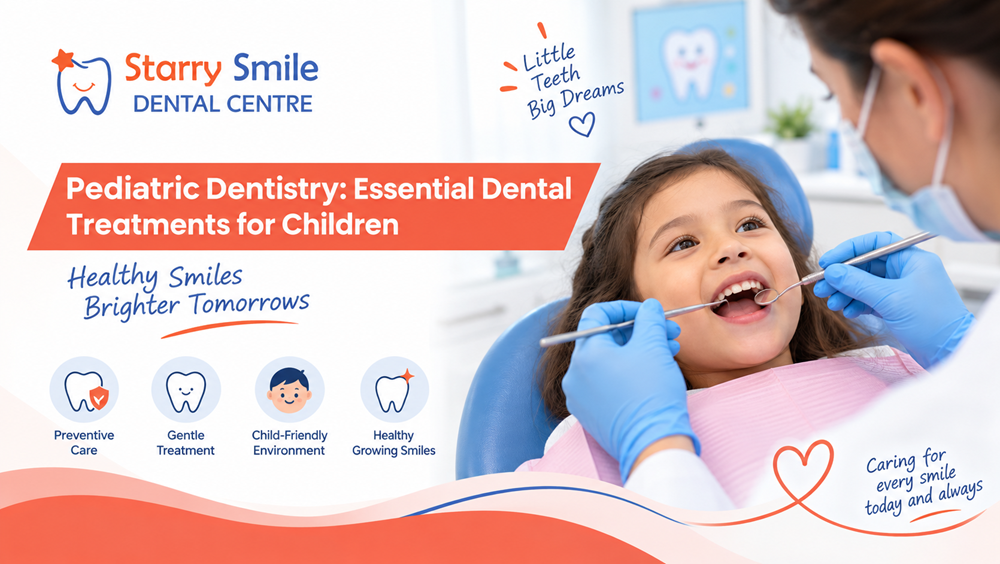
Pediatric Dentistry: Essential Dental Treatments for Children. Children’s teeth need consistent care from the moment the first tooth appears. Although baby teeth eventually fall out, they play an important role in eating, speaking, facial development and guiding permanent teeth into position. Therefore, paediatric dentistry focuses not only on treating dental problems but also on preventing them before they become painful or complicated.
At Starry Smile Dental Clinic - Dubai, children can receive age-appropriate dental care in a supportive environment. From routine check-ups and fluoride treatments to fillings, sealants and early orthodontic assessments, the right treatment can help children develop healthy habits and maintain a confident smile as they grow.
What Is Paediatric Dentistry?
Paediatric dentistry is the branch of dentistry that focuses on the oral health of babies, children and teenagers. It includes preventive care, diagnosis, treatment and guidance for growing smiles.
Importantly, children have different dental needs at different stages. A toddler may need advice about brushing and feeding habits, while a school-aged child may require cavity treatment or fissure sealants. Similarly, teenagers may need orthodontic guidance or treatment for sports-related dental injuries.
Dubai Health Authority guidelines recommend a child's first dental examination when the first tooth erupts and no later than 12 months of age. Regular examinations then help dentists monitor developing teeth and identify problems early.
Why Is Dental Care Important for Children?
Early dental care can prevent small problems from becoming major ones. For example, untreated tooth decay can cause pain, infection and difficulty eating. Moreover, dental problems may affect a child’s confidence and willingness to attend future appointments.
The Australian Dental Association notes that early childhood tooth decay remains a significant health concern and that early intervention can make treatment simpler.
Regular dental appointments also give parents an opportunity to learn about brushing, fluoride toothpaste, diet, thumb sucking, pacifiers and other factors that may influence oral development.
Essential Dental Treatments for Children
Every child needs individualised care. However, several treatments form an important part of children’s dental care.
1. Children’s Dental Check-Ups
Routine dental examinations are the foundation of preventive dentistry. During a check-up, the dentist can examine the teeth, gums, bite and developing jaw.
Additionally, the dentist may assess brushing habits and look for early signs of cavities, enamel problems or abnormal tooth development.
Regular check-ups also help children become familiar with the dental environment. As a result, they may feel more comfortable during future visits.
2. Professional Teeth Cleaning
Children can develop plaque and tartar just like adults. Therefore, professional cleaning may form part of their preventive care when recommended.
A dental professional can remove deposits that regular brushing may miss. At the same time, children can receive practical advice about brushing technique and cleaning between teeth.
The Australian Dental Association recommends brushing twice daily with age-appropriate fluoride toothpaste and cleaning between teeth once a day.
3. Fluoride Treatment
Fluoride treatment for children can help strengthen teeth and support cavity prevention when a dentist considers it appropriate.
Dubai Health Authority's current paediatric dentistry guidance recommends fluoride varnish as part of preventive care for children aged two years and above, with frequency based on risk and clinical assessment.
However, fluoride treatment should not follow a one-size-fits-all approach. The dentist considers factors such as age, oral hygiene, diet and the child's risk of developing tooth decay.
4. Dental Sealants
Back teeth contain grooves and pits where food particles and plaque can collect. These areas can sometimes be difficult for children to clean properly.
Dental sealants for children provide a protective coating over suitable tooth surfaces. Consequently, they can help reduce the areas where decay may develop.
Dubai's community dental guidance recognises pit and fissure sealants as part of preventive dental services for children.
5. Tooth-Coloured Fillings
If a child develops a cavity, a dentist may recommend a filling to remove the damaged portion and restore the tooth.
Children’s dental fillings can help preserve a tooth and restore its function. Depending on the situation, the dentist may select an appropriate restorative material based on the child's age, tooth condition and clinical needs.
Early treatment is generally preferable because a small cavity may require a simpler approach than extensive decay.
6. Treatment for Deep Tooth Decay
Sometimes decay reaches deeper parts of a baby tooth. In such cases, ordinary filling treatment may not provide enough protection.
Depending on the child's condition, the dentist may consider treatments such as pulp therapy or a protective crown. These treatments aim to manage infection or extensive decay while preserving the affected tooth when appropriate.
Paediatric dentistry guidelines also cover pulp treatment, stainless steel crowns and other approaches for children requiring more comprehensive care.
7. Tooth Extraction
Although dentists generally aim to preserve healthy teeth, children’s tooth extraction may sometimes become necessary.
For example, extraction may be considered when a tooth has extensive damage, infection, unusual eruption problems or another condition where preservation is not suitable.
The dentist will explain the reason for extraction and discuss whether further treatment, such as a space maintainer, may be necessary.
8. Early Orthodontic Assessment
Not every child needs braces. Nevertheless, an early assessment can identify potential bite and alignment concerns.
A dentist may monitor issues such as crowded teeth, crossbite, excessive spacing or jaw development. If necessary, the child can be referred for orthodontic treatment at the appropriate stage.
Early assessment does not always mean immediate treatment. Instead, it allows the dental team to monitor growth and choose the right timing.
Common Paediatric Dental Treatments at a Glance
| Treatment | Main Purpose | When It May Help |
|---|---|---|
| Dental examination | Monitor oral development | Routine visits |
| Professional cleaning | Remove plaque/deposits | When clinically required |
| Fluoride application | Support enamel and cavity prevention | Based on risk |
| Dental sealants | Protect deep grooves | Suitable back teeth |
| Tooth-coloured filling | Restore decayed teeth | Cavities |
| Pulp treatment | Manage deep decay | Selected cases |
| Dental crown | Protect weakened teeth | Extensive damage |
| Tooth extraction | Remove unsuitable teeth | Severe damage or specific conditions |
| Orthodontic assessment | Check bite and alignment | When concerns appear |
Treatment suitability varies according to the child's age, dental development and individual clinical condition.
How Can Parents Prepare Children for a Dental Visit?
A positive first experience can make future appointments easier. Therefore, parents should avoid using frightening words or describing dental treatment in a negative way.
Instead, explain that the dentist will count and check the child's teeth. Reading children's dental books, playing pretend dentist and maintaining a calm attitude can also help.
Moreover, parents should tell the dental team about any previous difficult experiences, sensitivities or concerns. This information can help the team adapt communication and treatment to the child.
When Should a Child See a Dentist?
Parents should not wait until a child complains of tooth pain. A first dental visit should occur when the first tooth appears or by the first birthday, followed by regular professional care.
A visit is particularly important if parents notice:
- Toothache or sensitivity
- White, brown or black marks
- Bleeding gums
- Swelling around a tooth
- Difficulty chewing
- Broken or chipped teeth
- Unusual tooth eruption
- Persistent bad breath
- Jaw or bite concerns
Early assessment can often prevent a small concern from becoming a bigger problem.
Why Choose Starry Smile Dental Clinic - Dubai?
At Starry Smile Dental Clinic - Dubai, children's dental care can focus on prevention, comfort and long-term oral health. A child-friendly approach helps young patients become more comfortable with dental visits while parents receive clear information about recommended treatments.
Furthermore, each child's treatment needs can differ. Therefore, the dental team can assess the child's teeth, discuss available options and develop a suitable care plan rather than applying the same treatment to every young patient.
Conclusion
Healthy teeth start with good habits and timely professional care. From paediatric dental check-ups and fluoride applications to sealants, fillings and orthodontic assessments, modern children's dentistry offers several ways to protect growing smiles.
Most importantly, parents should not wait for pain before arranging a dental appointment. Regular care helps dentists identify concerns early, while positive dental experiences can encourage children to look after their teeth throughout life.
At Starry Smile Dental Clinic - Dubai, families can seek professional guidance for their child's changing dental needs and take an important step towards a healthier, happier smile.
Social:
https://au.pinterest.com/pin/914934480574156140/
https://x.com/starry_llc/status/2097622548083331224
https://www.linkedin.com/feed/update/urn:li:share:7503389389020958720/


Comments
Post a Comment