Scaling and Polishing: Why Professional Teeth Cleaning Is Important
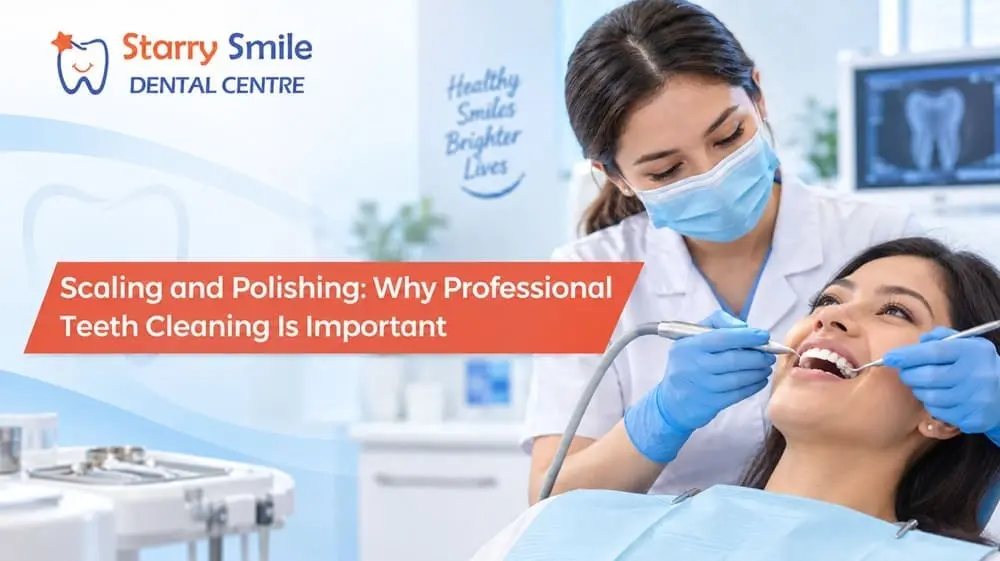
Scaling and Polishing: Why Professional Teeth Cleaning Is Important. A clean smile is not only about appearance. Healthy teeth and gums also make eating, speaking, and everyday life more comfortable. Even with regular brushing and flossing, some plaque can remain in areas that are difficult to reach. Over time, this plaque can harden into tartar or calculus, which normal brushing cannot remove.
That is where professional teeth cleaning, scaling and polishing can help. During a dental cleaning, a dental professional removes deposits from the tooth surfaces and helps you maintain better oral hygiene. According to the American Dental Association (ADA), scaling involves removing plaque, calculus and stains from the teeth.
What Is Scaling and Polishing?
Scaling and polishing are commonly performed during professional dental cleaning, although the exact treatment depends on your oral health.
Scaling focuses on removing plaque, tartar and surface stains from the teeth. Tartar forms when plaque becomes hardened. Because it attaches firmly to the tooth surface, a toothbrush cannot safely remove it completely.
Polishing comes afterward in many routine cleanings. It helps remove certain surface stains and leaves the teeth feeling smoother.
However, scaling and polishing should not be confused with scaling and root planing. Root planing is a deeper periodontal treatment used when gum disease affects areas below the gumline.
Why Does Professional Teeth Cleaning Matter?
Daily brushing and interdental cleaning remain essential. However, professional cleaning adds another level of care.
Plaque continuously develops on teeth. If you do not remove it effectively, it can harden into tartar. Once tartar develops, professional cleaning becomes necessary because ordinary brushing cannot remove these hardened deposits.
Moreover, tartar can make it harder to keep the gumline clean. As a result, the gums may become irritated, swollen or prone to bleeding.
Therefore, regular dental cleaning can support a cleaner mouth and help your dentist identify oral health concerns before they become more complicated.
Scaling vs Polishing: What Is the Difference?
| Feature | Scaling | Polishing |
|---|---|---|
| Main purpose | Removes plaque and tartar | Helps remove surface stains and smooth tooth surfaces |
| Focus | Deposits on teeth | Surface appearance and smoothness |
| Usually done by | Dental professional | Dental professional |
| Can brushing replace it? | No, not for hardened tartar | No, professional polishing provides a different cleaning step |
| Main benefit | Supports cleaner teeth and gums | Helps leave teeth feeling smoother |
The two procedures can complement each other, but they serve different purposes.
Key Benefits of Professional Dental Cleaning
1. Helps Remove Tartar
One of the biggest advantages of scaling and polishing is tartar removal. Hardened calculus can collect around the gumline and between teeth. Professional instruments allow dental professionals to remove these deposits more effectively.
2. Supports Healthy Gums
Plaque and tartar around the gums can contribute to inflammation. In early gum disease, gums may become red, swollen or bleed during brushing.
Professional cleaning, combined with good home care, can help maintain healthier gums. The ADA notes that plaque that remains on teeth can contribute to gingivitis, while untreated periodontal disease can damage the supporting tissues around teeth.
3. Helps Reduce Surface Stains
Coffee, tea, tobacco and some foods can contribute to surface staining. Dental polishing can help remove some external stains, giving teeth a cleaner appearance.
However, polishing is not the same as professional teeth whitening. It does not change the natural colour of teeth in the same way that a whitening treatment can.
4. Freshens the Mouth
When plaque and trapped deposits accumulate, they can contribute to unpleasant mouth odour. Cleaning these areas may help support fresher breath, particularly when combined with daily brushing and interdental cleaning.
5. Makes Teeth Feel Smoother
After cleaning, many patients notice that their teeth feel smoother when they run their tongue over them. Removing rough deposits can also make daily brushing easier.
6. Supports Preventive Dental Care
A professional cleaning appointment also gives your dentist an opportunity to examine your teeth and gums. If your dentist notices signs of gum inflammation, tooth decay or another concern, they can recommend appropriate care.
Who May Benefit From Scaling and Polishing?
Professional cleaning can benefit many people, including those who:
- Have visible tartar buildup
- Notice bleeding gums
- Have persistent plaque around the gumline
- Drink coffee or tea frequently
- Use tobacco products
- Find certain areas difficult to clean
- Have a history of gum problems
- Want to maintain regular preventive dental care
Nevertheless, the recommended cleaning schedule varies. Your dentist can suggest an interval based on your oral health, gum condition, plaque accumulation and individual risk factors.
How Often Should You Get Professional Teeth Cleaning?
There is no single schedule that suits every patient. Some people may need routine preventive cleanings, while others with gum disease or higher oral-health risks may require more frequent professional care.
Your dentist should determine the appropriate interval after examining your teeth and gums.
Importantly, professional teeth cleaning does not replace daily oral hygiene. The ADA recommends brushing and cleaning between teeth as important parts of maintaining oral health.
What Happens During a Dental Cleaning?
A typical appointment may include:
- Oral examination – The dental team checks your teeth and gums.
- Scaling – Hardened deposits and plaque are removed from appropriate tooth surfaces.
- Polishing – Surface stains may be reduced and the teeth can feel smoother.
- Oral hygiene advice – You may receive personalised brushing or interdental-cleaning guidance.
- Further treatment if required – If the examination identifies gum disease or another concern, your dentist may recommend additional care.
The exact process can vary depending on your oral condition.
Is Scaling the Same as Deep Cleaning?
No. This is an important distinction.
Routine scaling and polishing generally focuses on removing plaque, tartar and stains during preventive dental care. In contrast, scaling and root planing is a deeper periodontal procedure used for appropriate cases of gum disease. It involves cleaning tooth and root surfaces below the gumline and may require multiple appointments.
Therefore, patients should not assume that every dental cleaning requires deep periodontal treatment.
Professional Teeth Cleaning in Dubai
For patients searching for scaling and polishing in Dubai, choosing a dental clinic that provides an individual assessment is important. At Starry Smile Dental Clinic - Dubai, professional dental care can be planned according to your teeth, gums and overall oral-health needs.
Rather than waiting until tartar buildup becomes uncomfortable, regular dental visits can help you stay ahead of preventable oral-health problems. In addition, combining professional cleaning with brushing twice daily and cleaning between your teeth can create a stronger everyday oral hygiene routine.
Conclusion
Scaling and polishing are useful parts of professional oral care. While brushing and interdental cleaning remain the foundation of your daily routine, they cannot remove every hardened deposit. Professional dental cleaning helps address tartar and certain surface stains while giving your dentist an opportunity to assess your oral health.
For a healthier smile, therefore, combine daily oral hygiene, regular dental examinations and professional teeth cleaning according to your dentist's recommendations.
Social:
https://in.pinterest.com/pin/914934480574441947/
https://x.com/starry_llc/status/2100801673816158400
https://www.linkedin.com/feed/update/urn:li:share:7506568285790932992/


Comments
Post a Comment