Pediatric Dental Sealants: Protecting Children’s Teeth
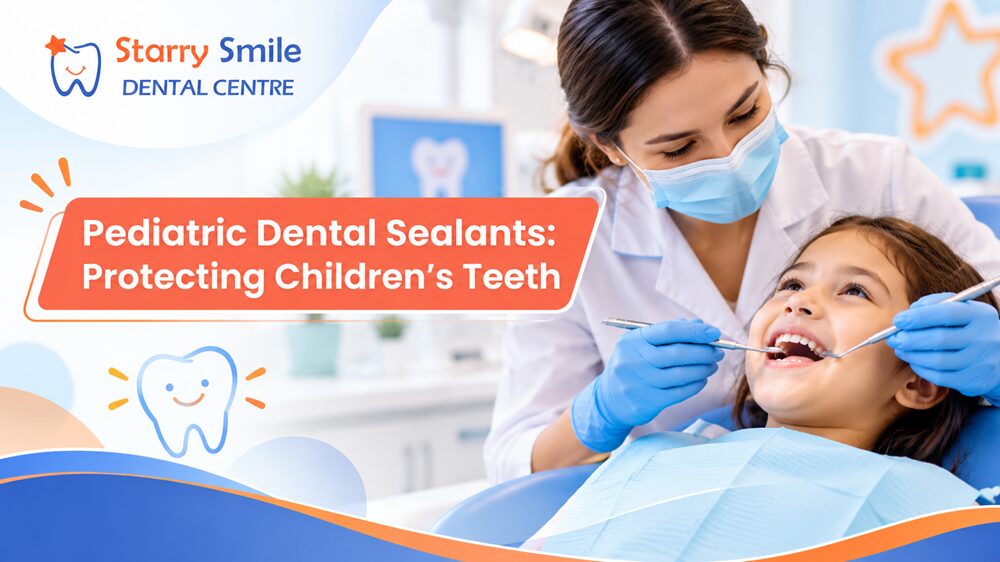
Pediatric Dental Sealants: Protecting Children’s Teeth. A healthy smile starts with good dental habits, but brushing alone may not always reach every part of a child’s teeth. The back teeth, especially the molars, have small grooves where food particles and bacteria can collect. Consequently, children may develop cavities even when they brush regularly. Pediatric dental sealants offer an additional layer of protection by covering these vulnerable surfaces.
At Starry Smile Dental Clinic – Dubai, educating parents about preventive dental care can help children build healthier habits from an early age. Dental sealants provide a simple way to reduce the risk of tooth decay, particularly when combined with regular dental check-ups, fluoride toothpaste and a balanced diet.
What Are Pediatric Dental Sealants?
Dental sealants for children are thin protective coatings that a dental professional applies to the chewing surfaces of the back teeth. The material flows into the tiny pits and grooves, creating a barrier against food debris and cavity-causing bacteria.
Unlike dental fillings, sealants do not usually require drilling when the tooth is suitable for preventive treatment. Instead, the dentist cleans the tooth, prepares its surface and applies the sealant according to the material's instructions.
Furthermore, the process is generally quick and comfortable for children. Once the material sets, the child can use the tooth normally.
Sealants work best as part of a complete preventive dentistry plan. Although they reduce the risk of cavities on treated surfaces, they do not protect every part of the mouth or replace daily brushing.
Why Do Children Need Dental Sealants?
Children's teeth face several challenges as they grow. For example, children may enjoy sugary snacks, forget to brush thoroughly or struggle to clean the deep grooves of their molars. As a result, plaque can build up in areas that a toothbrush may not reach easily.
Pediatric dental sealants help protect these surfaces by creating a physical barrier. According to the US Centers for Disease Control and Prevention (CDC), sealants can prevent around 80% of cavities in the back teeth during the first two years after application. They can continue to provide protection for several years when they remain intact.
In addition, preventing cavities may reduce the need for fillings and help children avoid discomfort associated with tooth decay.
The main benefits include:
Cavity prevention: Sealants protect vulnerable grooves on molars.
Extra protection: They complement brushing and fluoride toothpaste.
Comfortable treatment: Application usually involves no drilling or injections.
Long-lasting support: Sealants can remain effective for several years, although dentists need to check them regularly.
Support for healthy habits: Preventive appointments help children become familiar with dental care.
When Should Children Get Dental Sealants?
Timing matters because newly erupted permanent molars can be vulnerable to decay. Dentists often assess the first permanent molars when they appear at around six years of age. They may also recommend sealants for second permanent molars, which typically erupt around age 12.
However, age alone does not determine whether a child needs sealants. The dentist will consider tooth development, existing decay, cavity risk and the condition of each tooth.
Approximate age | Dental development | What parents can do |
|---|---|---|
Around 6 years | First permanent molars often appear | Ask about sealants during a dental check-up |
Around 12 years | Second permanent molars often appear | Arrange an assessment of the new molars |
Other ages | Some baby teeth or permanent teeth may benefit | Follow the dentist's individual recommendation |
These ages are general guides rather than strict deadlines. Therefore, parents should arrange regular dental visits so the dentist can identify the right time for preventive care.
Related Post:
» Common Childhood Dental Problems: Causes, Symptoms and Treatments
» How to Make Dental Treatments Stress-Free for Children
» Clear Aligners: Benefits and Treatment Process
» Dental Crown Sensitivity: Causes, Symptoms, and Effective Treatments
» Gum Disease Treatment: How to Protect Your Gums and Teeth
How Is the Dental Sealant Procedure Performed?
Many parents worry that dental treatment might frighten their children. Fortunately, dental sealant application is usually straightforward and does not involve drilling when the tooth is suitable for the procedure.
The dentist typically follows these steps:
Examination: The dentist checks the child's teeth and identifies suitable surfaces for sealants.
Cleaning: The selected tooth receives a thorough clean to remove plaque and food debris.
Preparation: The dentist keeps the tooth dry and prepares the enamel so the sealant can bond properly.
Application: The dentist carefully places the liquid sealant into the grooves.
Setting: Depending on the material, a special curing light helps the sealant harden.
Final check: The dentist checks the coating and the child's bite to ensure everything feels comfortable.
The appointment is generally short, although the total time depends on how many teeth need treatment. Moreover, children can usually return to their normal activities straight afterwards.
Are Dental Sealants Safe for Children?
When a qualified dental professional selects and applies them appropriately, dental sealants are considered a safe preventive option for children. The dentist assesses the tooth first and determines whether the surface is suitable.
Some children may have existing cavities that require treatment rather than a simple protective coating. Therefore, a proper examination remains essential before application.
Parents should also understand that sealants need regular monitoring. Over time, chewing pressure can wear down the material or cause part of it to chip. Fortunately, a dentist can check the coating during routine visits and repair or replace it when necessary.
If your child experiences toothache, swelling or sensitivity, arrange a dental assessment rather than assuming a sealant will solve the problem.
Dental Sealants vs Fluoride Treatments
Both sealants and fluoride treatments help prevent tooth decay. However, they work in different ways and protect teeth through different mechanisms.
Feature | Dental sealants | Fluoride treatments |
|---|---|---|
Main purpose | Covers pits and grooves on selected teeth | Strengthens enamel and supports remineralisation |
Application | A protective coating on tooth surfaces | Often a varnish, gel or other professionally selected fluoride product |
Main focus | Particularly useful for molar chewing surfaces | Helps protect a wider range of tooth surfaces |
Best use | Preventing decay in vulnerable grooves | Supporting enamel resistance to acid attacks |
Can they work together? | Yes | Yes |
Neither option replaces good oral hygiene. In fact, combining appropriate preventive treatments with regular brushing, healthy eating and dental examinations can provide more comprehensive protection. Your child's dentist can recommend a suitable approach based on their individual cavity risk.
How Parents Can Protect Children's Teeth at Home
Dental sealants provide an extra layer of defence, but everyday habits remain essential. Fortunately, parents can make a real difference by keeping oral care simple and consistent.
Brush twice daily: Help children brush with fluoride toothpaste appropriate for their age.
Supervise brushing: Younger children may need assistance to clean every surface properly.
Limit frequent sugary snacks: Reduce repeated exposure to sugary foods and drinks between meals.
Offer water regularly: Water helps children stay hydrated without the added sugar found in many sweetened drinks.
Arrange regular dental visits: A dentist can identify early signs of decay and check existing sealants.
Encourage positive habits: Praise children for brushing and attending appointments to help them feel comfortable about dental care.
Additionally, avoid using dental visits only when a child has pain. Regular preventive appointments can help identify potential problems before they become more serious.
Choosing a Children's Dentist in Dubai
Choosing the right dental clinic can help children feel more comfortable during appointments. Parents should look for a dental team that communicates clearly, explains procedures in child-friendly language and considers each child's needs.
At Starry Smile Dental Clinic – Dubai, parents can enquire about preventive dental care and whether sealants may suit their child. Before treatment, discuss the child's dental history, cavity risk, expected procedure and follow-up schedule with the treating dentist.
A positive dental experience can encourage children to care for their teeth as they grow. Most importantly, early prevention helps families focus on maintaining healthy smiles rather than waiting for cavities to develop.
Conclusion
Pediatric dental sealants offer an effective way to protect the grooves of children's back teeth against decay. When dentists apply them at the right time, these coatings can lower cavity risk and support a child's long-term oral health.
However, sealants work best alongside fluoride toothpaste, healthy food choices and regular dental check-ups. By discussing preventive options with a qualified dentist at Starry Smile Dental Clinic – Dubai, parents can make informed decisions about their children's dental care and help them develop habits that last a lifetime.
Social:
https://www.pinterest.com/pin/914934480575120875/
https://x.com/starry_llc/status/2108409771766530125
https://www.linkedin.com/feed/update/urn:li:share:7514176335276085248/


Comments
Post a Comment