Tooth Bonding: Repairing Chipped and Damaged Teeth
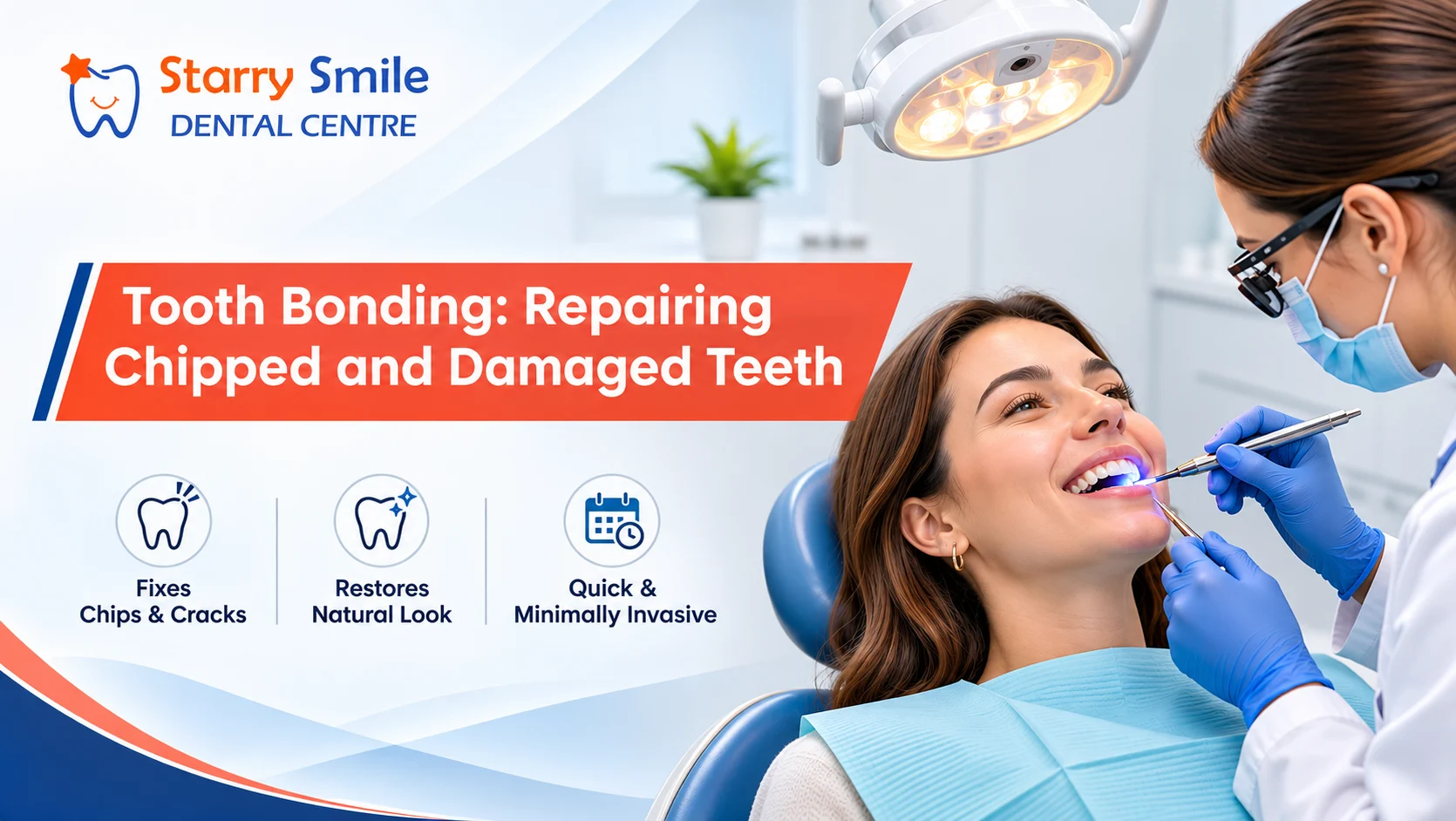
Tooth Bonding: Repairing Chipped and Damaged Teeth. A small chip, uneven edge or visible crack can change the appearance of your smile. Fortunately, modern cosmetic dentistry offers simple ways to restore damaged teeth without extensive dental work. Tooth bonding is one such treatment. It helps repair minor imperfections, improve tooth shape and create a more balanced smile. At Starry Smile Dental Clinic – Dubai, patients can explore dental bonding as a practical option for restoring their teeth and improving their confidence.
What Is Tooth Bonding in Cosmetic Dentistry?
Tooth bonding is a cosmetic dental procedure that uses a tooth-coloured material called composite resin to repair minor damage and improve the appearance of natural teeth. The dentist applies this material directly to the affected tooth, shapes it carefully and hardens it with a special curing light.
Unlike treatments that require significant tooth preparation, dental bonding usually preserves most of the natural tooth structure. Therefore, it is a popular choice for people who want to correct small cosmetic concerns without undergoing a complicated procedure.
Dentists commonly recommend bonding for:
Chipped or slightly broken front teeth.
Small gaps between neighbouring teeth.
Uneven or irregular tooth edges.
Minor cracks and surface imperfections.
Teeth with discolouration that does not respond well to whitening.
Teeth that appear shorter or have an uneven shape.
However, the dentist must first examine the tooth to determine whether bonding is suitable.
How Does Dental Bonding Repair Chipped and Damaged Teeth?
A chipped tooth does not always require a crown or veneer. In many cases, composite bonding for chipped teeth can restore the missing portion and improve the tooth's original shape.
The dentist selects a resin shade that closely matches the surrounding teeth. Next, they prepare the affected surface and apply the bonding material in small layers. They then shape the resin to recreate the natural contours of the tooth.
After that, a curing light hardens the material. Finally, the dentist smooths and polishes the repaired area to achieve a natural-looking finish.
The result can make a chipped tooth look more complete and blend the repaired area with the rest of the smile. Moreover, the treatment often requires just one appointment for straightforward cases.
Step-by-Step Tooth Bonding Procedure
Understanding the treatment process can help patients feel more comfortable before visiting a dentist.
1. Initial Dental Examination
First, the dentist examines the damaged tooth, checks your bite and evaluates your oral health. They also discuss your cosmetic expectations and decide whether composite bonding is the right approach.
2. Shade Selection
Next, the dentist chooses a composite resin colour that matches your natural teeth. This step plays an important role in achieving a realistic result, especially when repairing visible front teeth.
3. Tooth Surface Preparation
The dentist gently roughens the tooth surface and applies a conditioning liquid. This process helps the bonding material attach securely to the enamel.
4. Composite Resin Application
After preparing the surface, the dentist applies the tooth-coloured resin. They carefully mould it to repair the chip, close a small gap or improve the tooth's shape.
5. Curing and Polishing
Finally, a special light hardens the resin. The dentist adjusts the shape, checks your bite and polishes the surface until it looks smooth and natural.
Benefits of Tooth Bonding for Damaged Teeth
Cosmetic dental bonding offers several advantages, particularly for patients with minor tooth damage.
Benefit | What it means for patients |
|---|---|
Natural appearance | Resin matches the surrounding tooth shade |
Quick treatment | Many cases take approximately 30–60 minutes per tooth |
Minimal preparation | Usually requires little or no enamel removal |
Affordable option | Often costs less than veneers or crowns |
Immediate improvement | Patients can see the cosmetic difference after treatment |
Preserves tooth structure | Retains more natural enamel than many alternative treatments |
Furthermore, bonding generally does not require anaesthesia unless the dentist needs to treat decay or perform additional work.
Tooth Bonding vs Dental Veneers vs Dental Crowns
Patients sometimes find it difficult to choose between bonding, veneers and crowns. Although all three treatments can improve a tooth's appearance, they serve different purposes.
Feature | Tooth Bonding | Dental Veneers | Dental Crowns |
|---|---|---|---|
Main purpose | Minor chips and cosmetic corrections | Smile enhancement | Restoring significantly damaged teeth |
Material | Composite resin | Porcelain or composite | Ceramic, porcelain or other materials |
Tooth preparation | Minimal | Usually requires some enamel removal | Usually requires more tooth reduction |
Treatment time | Often one visit | Usually multiple visits | Usually multiple visits |
Durability | Commonly 3–10 years | Often 10–15 years or longer | Often 10–15 years or longer |
Best suited for | Minor imperfections | Front-tooth cosmetic improvements | Weakened or extensively damaged teeth |
These are general estimates, not guaranteed lifespans. Actual results depend on the material, bite, oral hygiene and dental care.
Tooth bonding works well for smaller cosmetic corrections. In contrast, veneers may suit patients seeking broader smile changes, while crowns can provide greater coverage and support when a tooth has significant structural damage.
Related Post:
» Dental Fillings: Types, Benefits and When You Need One
» Pediatric Tooth Extraction: When Is It Necessary?
» Dental Veneers: Benefits, Process and Long-Term Care
» Pediatric Dental Sealants: Protecting Children’s Teeth
» How Dental Crowns Restore Damaged or Broken Teeth
Who Is a Good Candidate for Tooth Bonding?
Not everyone with a damaged tooth needs the same treatment. Nevertheless, dental bonding in Dubai may suit adults who have healthy teeth and gums but want to correct minor cosmetic problems.
You may be a suitable candidate if:
You have a small chip on a front tooth.
Your teeth have minor gaps or uneven edges.
You want to improve the shape of one or two teeth.
Your tooth has mild discolouration.
You prefer a treatment that preserves natural enamel.
On the other hand, patients with extensive tooth decay, severe fractures, advanced gum disease or significant bite problems may need alternative treatment. For example, a crown may provide better protection when a large portion of the tooth has broken.
An important point: If you experience pain, swelling or sensitivity after breaking a tooth, arrange a dental examination promptly. A visible chip does not always show the full extent of the damage.
How Long Does Tooth Bonding Last?
One common question patients ask is how long composite bonding will maintain its appearance. Generally, dental bonding lasts around 3–10 years, although some restorations may need attention earlier.
Several factors influence its lifespan:
Oral hygiene: Regular brushing and flossing help protect the surrounding tooth structure.
Eating habits: Biting hard foods can damage the resin.
Lifestyle choices: Frequent coffee, tea and tobacco use can contribute to staining.
Biting pressure: Teeth grinding and clenching may cause bonding to chip or wear.
Dental maintenance: Regular examinations help dentists identify small problems before they become larger.
With suitable care, patients can maintain their bonded teeth for several years. Nevertheless, the dentist may recommend polishing, repairing or replacing the material when necessary.
Aftercare Tips to Protect Your Bonded Teeth
The treatment does not end when you leave the dental clinic. In fact, your daily habits have a major influence on how well the bonding material performs.
Follow these practical tips:
Brush twice daily using a soft-bristled toothbrush.
Floss gently once a day.
Avoid biting ice, hard sweets and nutshells.
Do not use your teeth to open bottles or packaging.
Avoid biting fingernails and chewing pens.
Limit frequent exposure to coffee, tea and other staining drinks.
Visit your dentist regularly for professional cleaning and examinations.
Wear a night guard if your dentist identifies teeth grinding.
Additionally, contact your dentist if the bonded area develops a rough edge, changes shape or feels uncomfortable when you bite.
Is Tooth Bonding Worth Considering in Dubai?
Dubai offers several cosmetic dental treatment options, but the right choice depends on your dental condition, expectations and budget. Tooth bonding can be a convenient option when you want to repair a small chip without undergoing extensive restorative work.
At Starry Smile Dental Clinic – Dubai, patients can discuss their concerns with a dental professional and understand which treatment may suit their needs. The dentist can assess the damaged area, explain the expected results and recommend an appropriate treatment plan.
A natural-looking smile does not always require major changes. Sometimes, a small and carefully planned repair can make a noticeable difference. Therefore, if chipped, uneven or damaged teeth affect your confidence, consider arranging a dental consultation to explore your options.
Conclusion
A chipped or damaged tooth does not have to affect your smile or confidence. Tooth bonding offers a simple and effective way to repair minor imperfections while preserving much of your natural tooth structure. With proper dental care, regular check-ups and healthy daily habits, bonded teeth can maintain their appearance for several years. If you want to improve your smile, consult Starry Smile Dental Clinic – Dubai to explore whether composite dental bonding is the right solution for your needs.
Social:
https://in.pinterest.com/pin/914934480575901239/
https://x.com/starry_llc/status/2117193973676789799
https://www.linkedin.com/feed/update/urn:li:share:7522963642791936000/


Comments
Post a Comment